Home · Services · Emergency Roof Tarping
Emergency Roof Tarping in Brea, CA
Quick answer
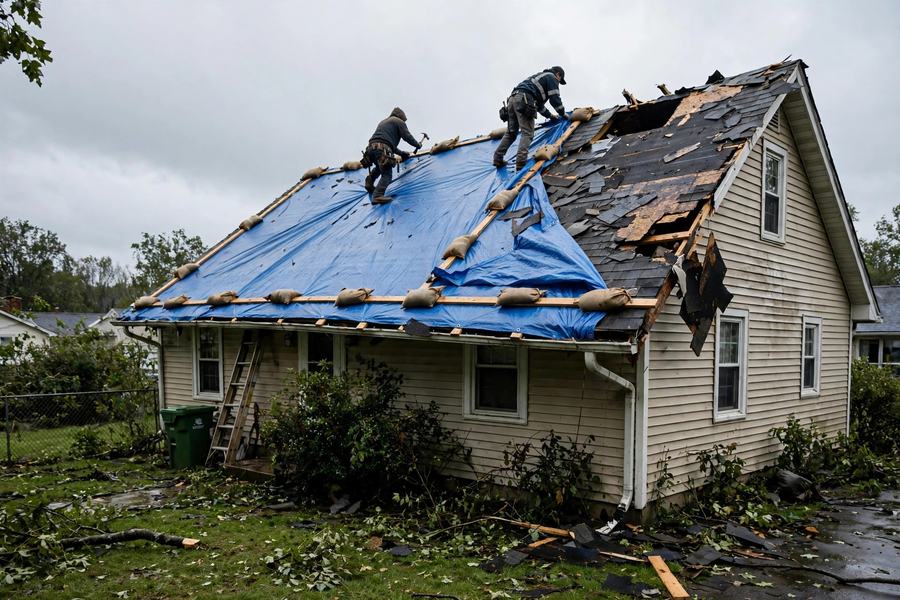
Wind-anchored tarping for Brea roofs opened by canyon gusts, photographed for the claim.
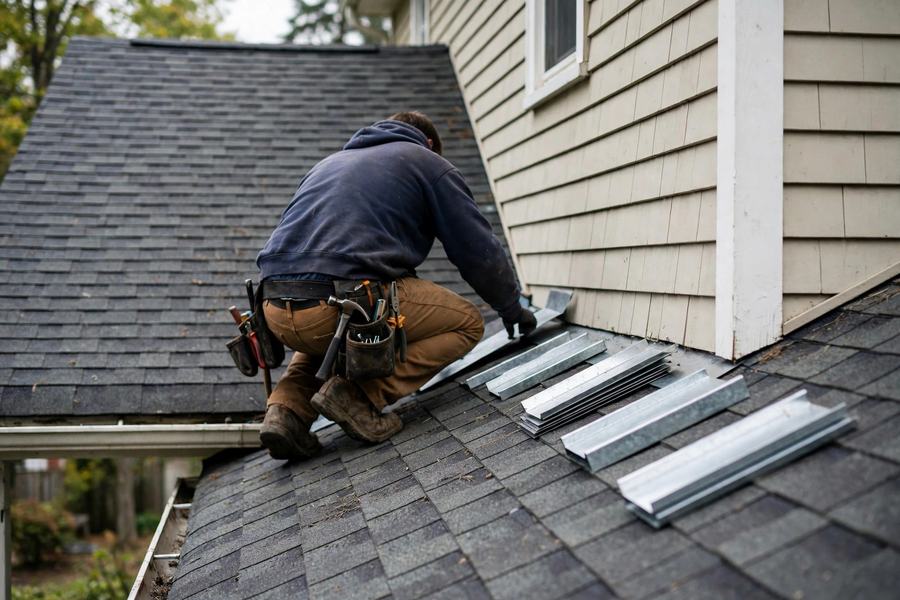
Tarping in Brea must survive the same wind that made the hole: gusts through the canyon mouths will peel a casual tarp before the rain ends. The tarp is anchored to sound structure, photographed for the claim, and written as the bridge it is, with the permanent repair named and scheduled in the same conversation.
Signs you need emergency roof tarping
- A tree, limb, or storm debris has opened the roof
- Shingles or decking are missing over living space
- Rain is forecast before a permanent repair can happen
- An insurer or adjuster has asked for the property to be protected from further damage
What the job involves
What affects the price
- Size and height of the damaged area and roof pitch
- Whether decking is broken through or only covering is lost
- Time of day and storm timing; a tarp placed ahead of the next band is worth more than one placed after
- Tarp method the roof material allows (metal and tile anchor differently from shingle)
When it is an emergency
This is the emergency page. A roof open to the sky during storm season takes water with every band that passes, and policies expect reasonable protection against further damage. If a tree is on the roof, stay out of the rooms under it until someone has looked at the structure. Call, keep people clear, and do not climb up to take your own photos.
PLACEHOLDEREmergency Roof Tarping across the Brea area
Related services
Roof Repair
Repair of the failing detail on a Brea foothill roof, scoped from the attic and the roof, not the street.
Roof Leak Repair
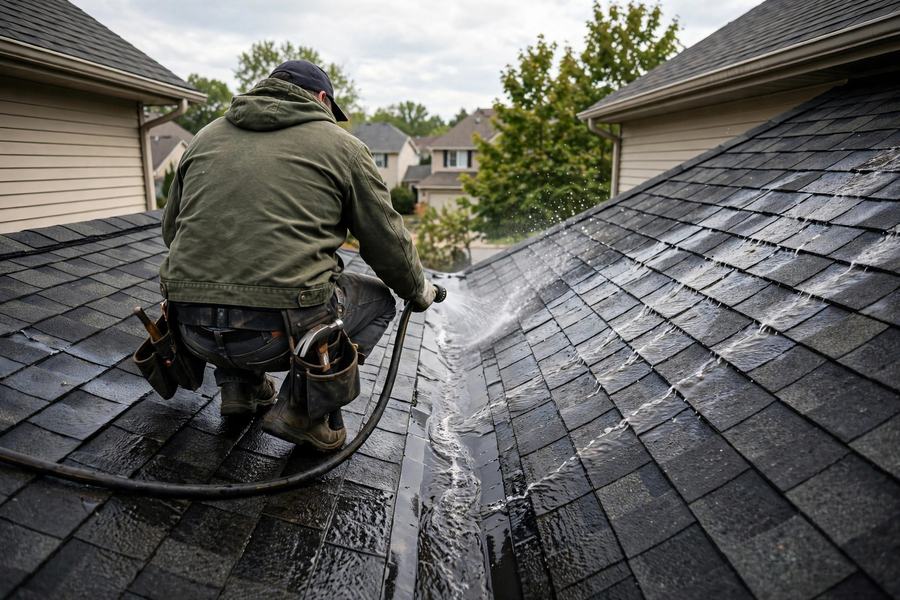
Finding a Brea leak's true entry point, with the underlayment under the tile read and reported.
Storm & Hail Damage Roof Repair
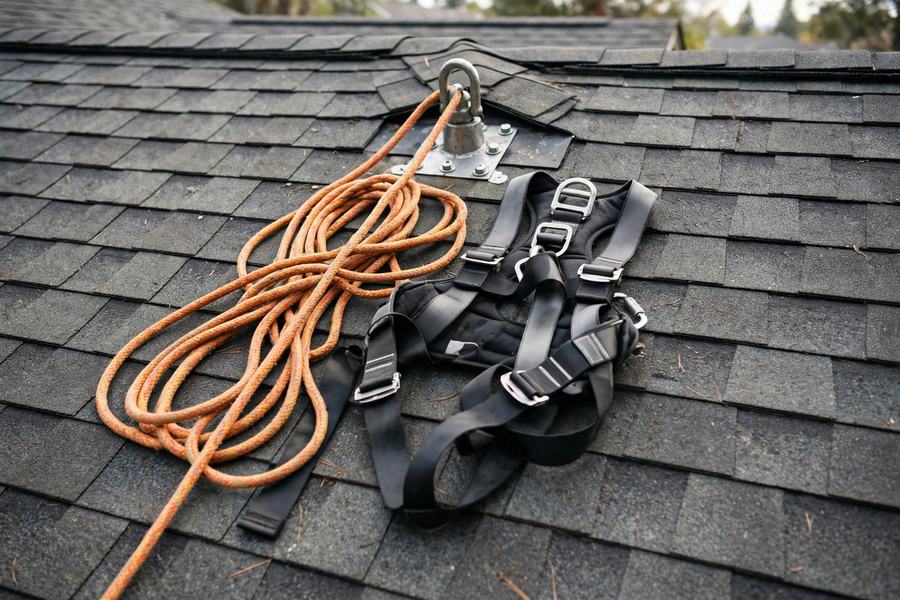
Wind damage repair on Brea roofs, with the storm event documented apart from the roof's age.
Flashing & Vent Repair
Flashing repair at Brea headwalls, chimneys, and vent stacks, where canyon winds drive rain sideways.
Emergency Roof Tarping questions, answered
When is emergency roof tarping an emergency?
This is the emergency page. A roof open to the sky during storm season takes water with every band that passes, and policies expect reasonable protection against further damage. If a tree is on the roof, stay out of the rooms under it until someone has looked at the structure. Call, keep people clear, and do not climb up to take your own photos.
What affects the price of emergency roof tarping in Brea?
The main price factors for emergency roof tarping are covered in the cost section above. The contractor confirms the exact price in a written estimate after seeing the job, and nothing is owed until you approve it. The call and the referral are free.
How long does a roof last here?
Asphalt architectural shingles commonly serve 20 to 30 years in mild conditions and less where heat, hail, salt air, or storm exposure work on them; three tab shingles run shorter. Metal roofing is the long option at 40 to 70 years with fastener and seam maintenance along the way. Vent pipe boots and sealant joints are the short life parts on any roof at roughly 10 to 15 years, which is why a sound roof can still leak at a penetration.
My roof is leaking. Can it wait until the weekend?
If water is actively coming through, treat drywall and belongings first today: bucket under the drip, move what can be moved, and call today. Water pooled above a ceiling can bring the ceiling down, so keep people out from under a bulging section. A dry stain that only grows after rain can wait for a scheduled inspection this week. What should not wait past the next rain is any opening you can see from the ground: missing shingles or lifted flashing are entries the next storm will use.
Hail hit our street. Is it worth having the roof checked before filing anything?
Yes, and the order matters: inspection first, claim decision second. Hail damage that matters is functional: fractured or bruised shingle mats that shorten the roof's life, documented in test squares per slope. Dents in soft metals and gutters support the finding. An inspection gives you dated photos and a per slope record; with that in hand, the claim decision is arithmetic against your deductible and your wind and hail terms. Filing first and documenting later is how storm claims get argued.
Request a callback
Prefer to talk later? Leave your details and an independent local pro will call you back. No charge to you, no obligation.
Tonner Canyon Roofing Co is a free referral service. Submitting this form connects you with independent local contractors who provide the work.